Congrats — your program is live! Your team’s difficult work, imagination, and perseverance have paid off, and your clients are encountering the item you carefully planned for them.
But whereas propelling your application may be a noteworthy turning point, it’s truly fair the start of its lifecycle.
Picture your unused program as a high-performance vehicle. Without legitimate upkeep, indeed, the most excellent car begins to break down. The motor wavers, the brakes have become questionable, and before long, you’re stranded by the side of the street, pondering what went wrong.
The same thing happens with your program. Without continuous care and upkeep, little issues develop into enormous issues, performance deteriorates, vulnerabilities develop, and your clients gotten to be disappointed.
🔹 Why Upkeep Things 🔹
Security vulnerabilities and bug fixes:
Unused vulnerabilities are always being found by both cybersecurity specialists and cybercriminals. Without fixing these vulnerabilities and tending to bugs instantly, your application might gotten to be a sitting duck for assaults, putting your users’ information at risk, and your validity nearby it.
Compatibility with unused innovations:
Innovation advances — working frameworks, browsers, third-party administrations — and your application must keep up. Without upkeep, it may end up contradictory or break when the stage it depends upon gets overhauled. Remaining up to date ensures your clients a smooth involvement, notwithstanding of their gadget or stage.
Execution optimization:
Over time, your application may degrade due to developing information, design changes, or, indeed, code wasteful aspects. Support lets you distinguish bottlenecks and fine-tune execution to keep it quick, solid, and agreeable for your clients, just as your application develops.
Upgraded client fulfillment:
When your clients realize you’re tending to issues rapidly, including small changes, and keeping their experience smooth, devotion increases. This specifically contributes to your foot line — holding clients and turning them into advocates for your item.
Versatility for future development:
If you’re considering long-term, including modern highlights, developing your client base, or amplifying your services, a well-maintained codebase shapes a solid foundation for future developments. Without legitimate care, including unused usefulness can gotten to be untidy, delicate, and inclined to breakage.
🔹 What Computer Program Upkeep Includes 🔹
✅ Bug fixes and fixes:
Resolve issues that time recently developed or cause blackouts.
✅ Security upgrades:
Near vulnerabilities and ensure your users’ information from developing cyberthreats.
✅ Execution changes:
Make strides in speed, diminish idleness, and empower your application to handle developing workloads nimbly.
✅ Code refactoring and specialized obligation expulsion:
Clean up chaotic code and refactor for more prominent soundness, meaningfulness, and future-proofing.
✅ Compatibility fixes:
Alter for modern OS, browser, or stage releases.
✅ Client encounter enhancements:
Analyze utilization designs and react with little changes that make a significant difference to users’ fulfillment.
🔹 The Foot Line 🔹
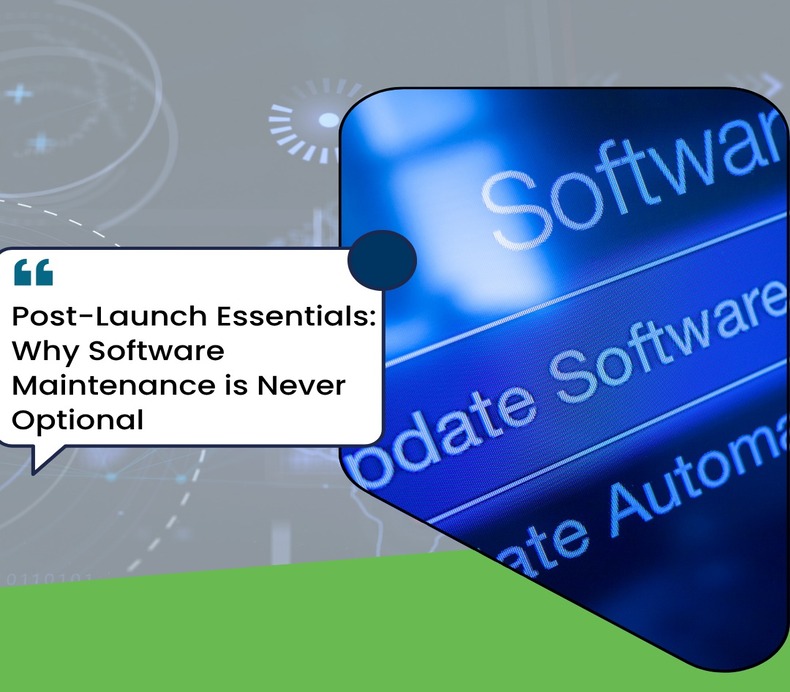
Post-launch support isn’t an extravagance — it’s a need.
It’s the way you keep your program solid, versatile, reliable, and a solid resource for your commerce in a continually changing scene.
Eventually, a well-maintained application signals to your clients that you just care about their experience and are in it for the long haul.
The result?
Higher maintenance, more noteworthy devotion, a solid notoriety, and an item that stands the test of time — all while conveying progressive esteem to your clients.