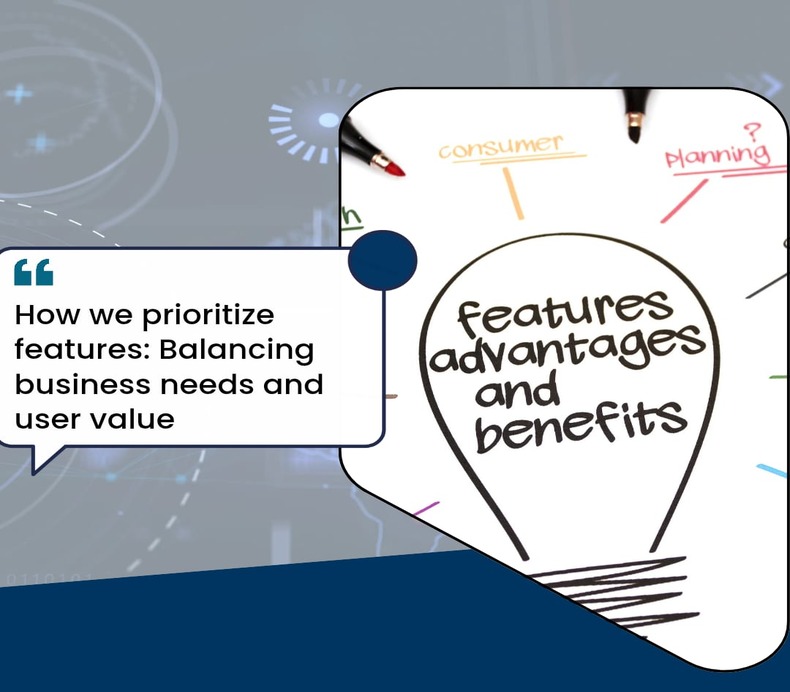
Within the ever-evolving world of item improvement, thoughts are all over. Each group, each user, and each partner encompasses a wishlist. The genuine challenge? Prioritizing the proper features, the ones that not as it were unravel client issues but also adjust with trade objectives.
1. The Establishment:
Begin with a Reason
Some time recently, we indeed started assessing highlights, we inquire a straightforward but effective address:
“Why does this highlight matter?”
A highlight request, no matter how exciting, must tie back to our item vision. On the off chance that it doesn’t align with our mission, core values, or long-term item strategy, we delay and reassess. This guarantees we’re not building for the purpose of building, but making something genuinely important.
2. Profound Tuning in:
Understanding the Client Voice
Our clients are at the heart of each choice we make. Their torment focuses, behavior, and criticism fuel our prioritization motor. Here’s how we accumulate client experiences:
Client Criticism Circles:
Through in-app studies, bolster tickets, interviews, and audits.
Client Behavior Information:
Following the utilization designs, drop-offs, and contact focuses within the item.
Community Discussions:
Locks in with clients on social media, gatherings, and webinars.
We do not fair listen—we analyze, empathize, and distinguish repeating needs. If different clients are inquiring about the same change or on the off chance that we receive unreliable contact in a workflow, that’s a solid flag.
3. Adjusting with Commerce Goals
Once we’ve assessed the client’s affect, we bring it within the commerce focal point.
Each highlight is inspected against a set of questions:
Will it increment income or client maintenance?
Can it decrease procurement costs or operational overhead?
Will it separate us from competitors or open up a modern showcase?
Prioritizing highlights isn’t as it were about satisfying users—it’s also approximately making choices that drive the trade forward. After all, a solid trade maintains awesome client encounters.
4. Systems We Believe:
Bringing Objectivity to the Method
To expel inclination and bring structure to our choices, we utilize tried-and-tested prioritization systems. Many of our favorites incorporate:
🔹 RICE Scoring (Reach, Affect, Certainty, Exertion)
We score each feature based on how many clients it’ll reach, the potential affect, our certainty within the result, and the exertion required. This makes a difference us measuring the ROI of each thought.
🔹 Esteem vs. Exertion Lattice
This visual approach makes a difference for us to spot speedy wins (tall esteem, moo effort), vital speculations (tall esteem, tall effort), and low-priority things (moo esteem, tall effort).
🔹 MoSCoW Strategy (Must-have, Should-have, Could-have, Wo n’t-have)
Particularly valuable amid sprint planning, this makes a difference when we communicate needs clearly with both internal groups and outside partners.
5. Cross-Team Collaboration:
It’s Not a Solo Amusement
Highlight prioritization doesn’t happen in a vacuum. We frequently conduct cross-functional planning sessions, including product managers, creators, engineers, marketers, and the client. Each group brings a diverse point of view:
Building highlights specialized limitations or conditions.
The plan centers on ease of use and involvement.
Showcasing sheds light on showcase patterns and situating.
Back offers firsthand torment focuses from clients.
These sessions offer assistance us discovering arrangements and guarantee that we’re not as it were building the proper highlights, but building them right.
6. Adaptability is Key:
Reassess and Adjust
We do not treat our guide as a settled list—it’s a living record. Here’s how we remain dexterous:
Normal Surveys:
We reassess needs each few weeks based on new information.
Experimentation:
We test highlights with smaller cohorts some time recently full rollout.
Criticism Integration:
If a recently launched product includes startling input, we react rapidly.