Alright, let’s be real for a second—tech moves at breakneck speed these days. Everybody’s hustling. Companies are basically in a race to drop new stuff before anyone else does, because customers? Yeah, they want everything yesterday. Slick features, zero bugs, instant fixes. Investors? Even more demanding. They want to see those numbers go up, new ways to make cash, and proof you’re not just sitting there collecting dust. Startups will brag about “moving fast and breaking things” (thanks, Zuck), but big companies? They can’t afford to have their stuff fall apart, so they play it safe.
But here’s the kicker: go too fast, and you’re basically begging for disaster. Go too slow, and you might as well send your users a link to your competitor’s website.
Nailing that balance? That’s the golden ticket, and honestly, it’s a nightmare.
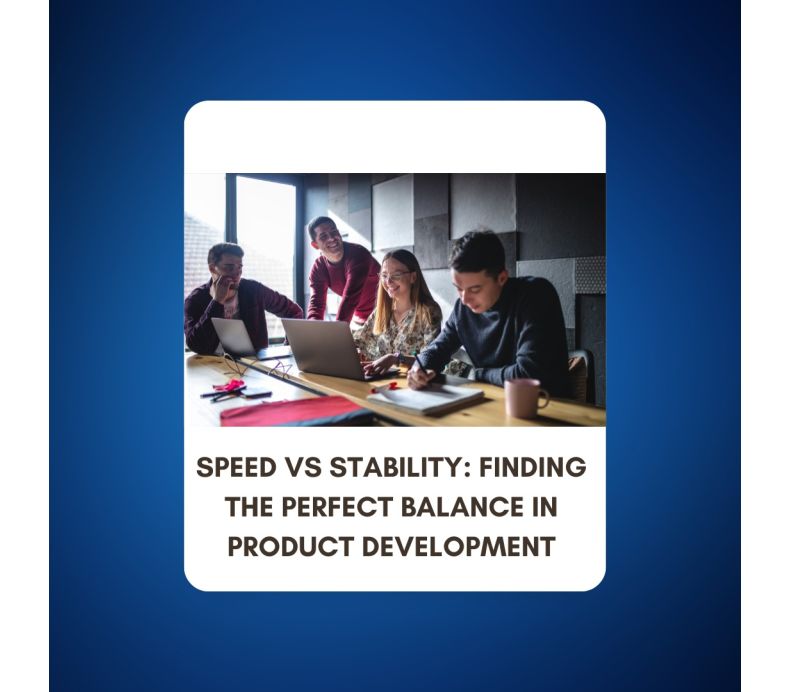
Speed vs. Stability: The Eternal Slap Fight
Every product team has had that “oh crap” moment: Do we push this feature out now, even though it’s…let’s say, a little rough around the edges? Or do we keep tweaking until it’s perfect, and hope the competition doesn’t eat our lunch?
This isn’t just some theoretical debate. Speed and stability are literally pulling you in opposite directions. Let’s break it down.
Why Going Fast Actually Matters 🚀
First-Mover Swag
In the wild world of tech, being first isn’t just cool, it’s survival. Think TikTok—they showed up, dropped new features like AR filters and live streams left and right, and pretty much steamrolled Vine and Dubsmash. Blink and you missed it.
Learn Quick or Eat Dust
Fast releases mean you get feedback faster. Amazon’s the poster child here—they’re always tweaking, pushing mini-updates, watching what people do, then tweaking again. No waiting around for the “perfect” product. Perfect? That’s a unicorn.
Keep the Vibes Up
Dropping new stuff on the regular? That’s how you keep both your team and your users hyped. People like to see things moving. Stakeholders, stop nagging. Dev teams feel like actual wizards.
Catch the Trends
Trends come and go faster than TikTok dances. If you’re late to the party with something like AI recs or crypto payments, congrats, you’re officially old news.
👉 Of course, going too fast can turn your shiny app into a dumpster fire. Bugs, crashes, angry tweets. Been there.
Why Stability Actually Keeps You Alive ⚖️
Trust or Bust
Nobody’s got patience for apps that flake out. Imagine your bank app freezing mid-transfer. Or your fitness tracker telling you you ran a marathon while you were asleep. That’s how you lose users—forever.
Zoom’s a great example. They exploded in 2020, but then came “Zoom bombing” and privacy drama. They had to hustle to fix stuff or risk becoming a meme.
Don’t Build on Jenga Towers
If you’re always patching with quick, sloppy fixes, you’re basically piling up tech debt until the whole thing collapses. Twitter (fine, X) is notorious for this—outages galore because their backend couldn’t keep up with the new features.
Pay Now, Save Later
Fun fact: IBM figured out it costs like 30 times more to fix a bug after launch than before. So yeah, invest in quality early, or get ready to watch your budget go up in flames later.
Compliance Nightmares
Some industries—finance, health, airlines—don’t mess around. You mess up, people lose money, or worse. Stability isn’t a “nice to have,” it’s literally the law.
👉 But if you’re too slow and steady, you end up watching the competition run right by you. Ouch.
So…How Do You Not Screw It Up?
Here’s what the big players do:
1. Agile: Keep It Moving, but Don’t Break Stuff
Agile’s all about baby steps. Instead of dropping one giant update every six months, you push smaller changes every week or two. That way, you’re always making progress, but if something blows up, it’s easy to fix. Spotify rocks this with their “squad” setup—tiny teams own their stuff, ship fast, but don’t trash the place.
2. CI/CD: Let the Bots Do the Hustle
Honestly, why break a sweat when you’ve got robots dying to do it for you? Toss all that tedious stuff—building, testing, tossing code into production—over to the automation gremlins. Grab a coffee, scroll your phone, whatever. Look at Netflix, those absolute lunatics are pushing out code updates so fast it’s like they’re speedrunning the internet. Thousands of releases every single day, and not a single soul is sweating bullets. Their pipeline? Smoother than a jazz sax solo on a rainy night.
3. Feature Flags: Sneak Peek, Not Full Blast
Why dump a shiny new feature on everyone and pray it doesn’t explode? Nah—flip a switch for a handful of users, watch what catches fire, and fix it before the masses even know. Facebook basically turned “dark launches” into an art form. Test-drive with your secret crew, then unleash it for real. Or, you know, kill it before anyone notices.
There you go. It’s messy, it’s stressful, but hey, that’s the gig. Welcome to product development in 2024.
4. Prioritization Matrices
Let’s be real: you don’t need every single feature shining like a diamond before you launch. That’s where stuff like the MoSCoW method (Must-have, Should-have, Could-have, Won’t-have—yeah, it’s a weird acronym) comes in handy. It helps you figure out what actually needs to ship now, and what can, you know, sit on the back burner until it’s ready for prime time.
5. Error Budgets: Google’s SRE Vibes
So, Google’s SRE folks basically give teams an “oops” allowance—an error budget. If your app is humming along nicely, you get to push out new features faster. If things start falling apart, boom, all hands on deck for stability. It’s kind of genius. Keeps everyone honest between chasing shiny new things and, well, keeping the lights on.
Real-World Stories
Case 1: Tesla – Fast and Furious, Sometimes Too Furious
Tesla’s wild for just dropping new features outta nowhere. One day, your car parks itself, the next it’s got karaoke mode—just like that. Over-the-air updates? Sure, that’s rad. But this whole “break stuff first, fix it later” vibe? Honestly, it’s bitten them in the ass a few times (yeah, the recall headlines aren’t going away). People dig the excitement and all, but at some point, even Elon’s gotta admit you can’t just YOLO your way through safety.
Bottom line: Hype gets folks in the door, but if your stuff keeps flaking, those fans turn on you faster than you can say “autopilot.”
Case 2: Slack – Fast and Loose, then Oops, Infrastructure
Slack? Classic startup move—go fast, patch it later. Worked fine till the user count went nuclear. Suddenly it’s, “Wait, should we actually make sure this thing doesn’t crap out mid-meeting?” Now they’re still rolling out cool features, but they’ve finally sprinkled in a little grown-up stability. About time, honestly.
Takeaway: You can sprint at first, but eventually, you gotta build a sturdy track.
Case 3: Apple – Slow and Steady (and Winning)
Apple’s the poster child for “let’s not rush.” They’d rather take an extra year to polish iOS than ship something half-baked. Critics moan about the wait, but, honestly, that polish is why people trust Apple with their life savings (and their selfies).
Takeaway: Sometimes, being the tortoise really does win the race.
Tips for Teams 🛠️
– Read the room, seriously. If you’re a scrappy startup, pedal to the metal. Stuck in BigCorp land? Maybe don’t break the sound barrier.
– Let the numbers punch you in the face. Outages, error logs, those angry tweets—pretending they’re invisible won’t save you.
– Adjust your pace or crash and burn. Launching somewhere new? Hit warp speed. Got a bajillion users? Probably shouldn’t YOLO it.
– Paranoia pays off. Monitor everything or get ambushed by bugs at 2am like you’re in some horror flick.
– Don’t be that hermit. Drag devs, QA, ops, and product into the same room and actually, you know, talk. Day one. No excuses.
Finding That Goldilocks Zone
Building products is like driving a sports car. Speed is your turbo, stability is your brakes. If you’ve only got one, you’re either in the ditch or stuck at the start line. The trick? Know when to hit the gas and when to pump the brakes.
Bottom Line ✨
It’s not “fast vs. stable.” It’s both, baby. Speed grabs attention; stability earns respect. The best teams? They’re quick on the gas but never forget to check the brakes. Whether you’re the scrappy startup or the big dog, your ability to juggle these two is what’ll set you apart.
🔑 TL;DR: Move fast, sure. But don’t torch your users’ trust along the way.