In today’s fast-paced, progressive economy, businesses are expected to improve, scale, and adapt rapidly than ever before. Whether you’re a startup or a well-established wanderer, one key move can affect your capacity to create and compete—cloud movement.
Cloud movement insinuates to moving progressed assets such as data, applications, and IT framework from on-premises servers to cloud-based environments. While the term may sound specialized, its impact goes past IT—it drives commerce alter, empowers bunches, and animates improvement.
Let’s explore how cloud development plays a critical role in moving businesses forward.
1. Adaptability That Develops With You
One of the foremost effective focal points of cloud relocation is on-demand adaptability. Conventional framework frequently requires a long preparation prepare to include modern servers or increase capacity. In differentiation, the cloud permits businesses to scale assets up or down based on real-time needs.
Whether you’re expanding to cutting edge markets, onboarding more clients, or experiencing customary movement spikes, cloud stages like AWS, Microsoft Purplish blue, and Google Cloud ensure your system keeps up without execution issues or included costs.
➡ Result: You develop at your pace, not your server’s.
2. Cost-Efficiency and Asset Optimization
Keeping up physical servers is expensive—not fair in terms of equipment, but moreover, control, cooling, genuine domain, and human assets. Cloud stages follow a pay-as-you-go model, which disposes of strong forthright speculations and minimizes unnecessary costs.
Cloud movement changes your IT investing from a capital expenditure (CAPEX) to an operational expenditure (OPEX). You pay only for the assets you utilize, and can track and optimize utilization with built-in instruments.
➡ Result: Diminished costs, way better budgeting, and higher ROI.
3. Upgraded Collaboration and Further Efficiency
The rise of farther and crossover work has made cloud adoption more basic than ever. Cloud-based instruments such as Google Workspace, Microsoft 365, and Slack permit groups to collaborate in real-time, share records immediately, and access information from anywhere with a web connection.
With centralized cloud capacity, form control, and seamless integration, groups are not tied to physical office situations. This adaptability boosts representative fulfillment, efficiency, and commerce coherence.
➡ Result: An associated, proficient workforce prepared to function across geographies.
4. Made strides in Information Security and Compliance
Opposite to the conviction that cloud situations are more hazardous, most cloud suppliers really offer predominant security measures compared to conventional on-prem setups. With highlights like encryption, firewalls, character get to organization (IAM), and standard security overhauls, your data remains secure.
Additionally, cloud providers back compliance with widespread rules and controls such as GDPR, HIPAA, and ISO certifications, making a distinction for businesses to meet legitimate necessities.
➡ Result: Peace of mind knowing your information is secure and compliant.
5. Solid Reinforcement and Catastrophe Recuperation
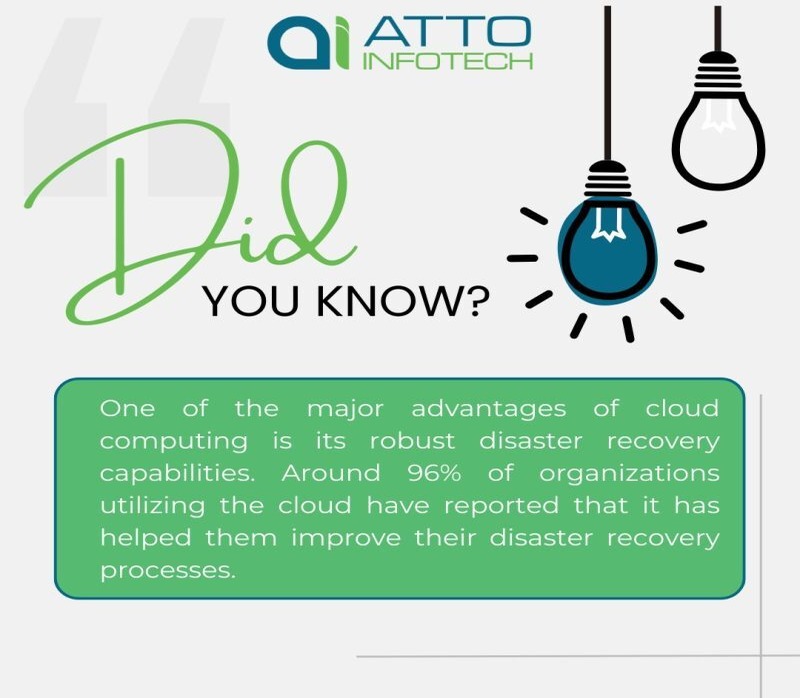
Information loss—whether due to equipment disappointment, characteristic fiascos, or human error—can cripple a trade. Cloud stages offer computerized reinforcements, geo-redundancy, and disaster recovery arrangements, guaranteeing your information is recoverable and operations can continue rapidly after any disturbance.
Conventional reinforcement frameworks can be expensive and moderate, whereas cloud recovery choices offer speed, unwavering quality, and reasonableness.
➡ Result: Trade flexibility indeed within the confront of startling occasions.
6. Quicker Sending and Development
Propelling an unused app? Testing a modern include? Analyzing client behavior? With the cloud, these assignments can be wiped out in minutes, not weeks. Businesses can quickly organize advanced circumstances, facilitated APIs, or grasp rising developments such as AI, machine learning, and huge information analytics.
By slaughtering establishment bottlenecks, cloud development speeds up development cycles, energizes experimentation, and reinforces a culture of improvement.
➡ Result: A future-ready commerce that advances quickly.
7. Competitive Edge in a Computerized Economy
Companies that move to the cloud gain the flexibility and bits of information to supply personalized experiences, make data-driven choices, and optimize client experiences. They can outpace competitors still tied to an unyielding, out of date establishment.
From progressive client benefit to shrewd mechanization, the cloud empowers businesses to gotten to be more spry, responsive, and customer-centric.
➡ Result: You do not fair compete—you lead.
8. Supportability and Natural Affect
Moving to the cloud can also diminish your company’s carbon footprint. Cloud data centers are, for the foremost portion, more energy-efficient than on-prem setups. Providers contribute to renewable vitality sources and green developments to control their framework, contributing to a more doable IT environment.
For businesses centered on ESG (Common, Social, and Administration) destinations, cloud determination adjusts well with supportability exercises.
➡ Result: Progress that is capable and resilient to the future.
In summary:
Cloud Movement May be a Commerce Need, Not a Trend
Moving to the cloud isn’t a consistent IT overhaul; or maybe, it could be a pivotal need for companies to develop, progress, and remain competitive. The advantages are revolutionary across all divisions, ranging from toll-free savings to widespread collaboration, enhanced security, and real-time experiences.
There is little doubt that the trip will consolidate organization, management, and change management.
Therefore, the cloud isn’t a wise alternative if your business is exhibiting signs of transformation, quality, and advanced advancement.
You use it as a launchpad.