So, you’ve got a great idea.
You’re ready to shake up the market, make a difference, and maybe even create the next big success story.
But wait.
Before you spend a lot of time and money building your product, ask yourself one important question:
“Do people really need what I’m making?”
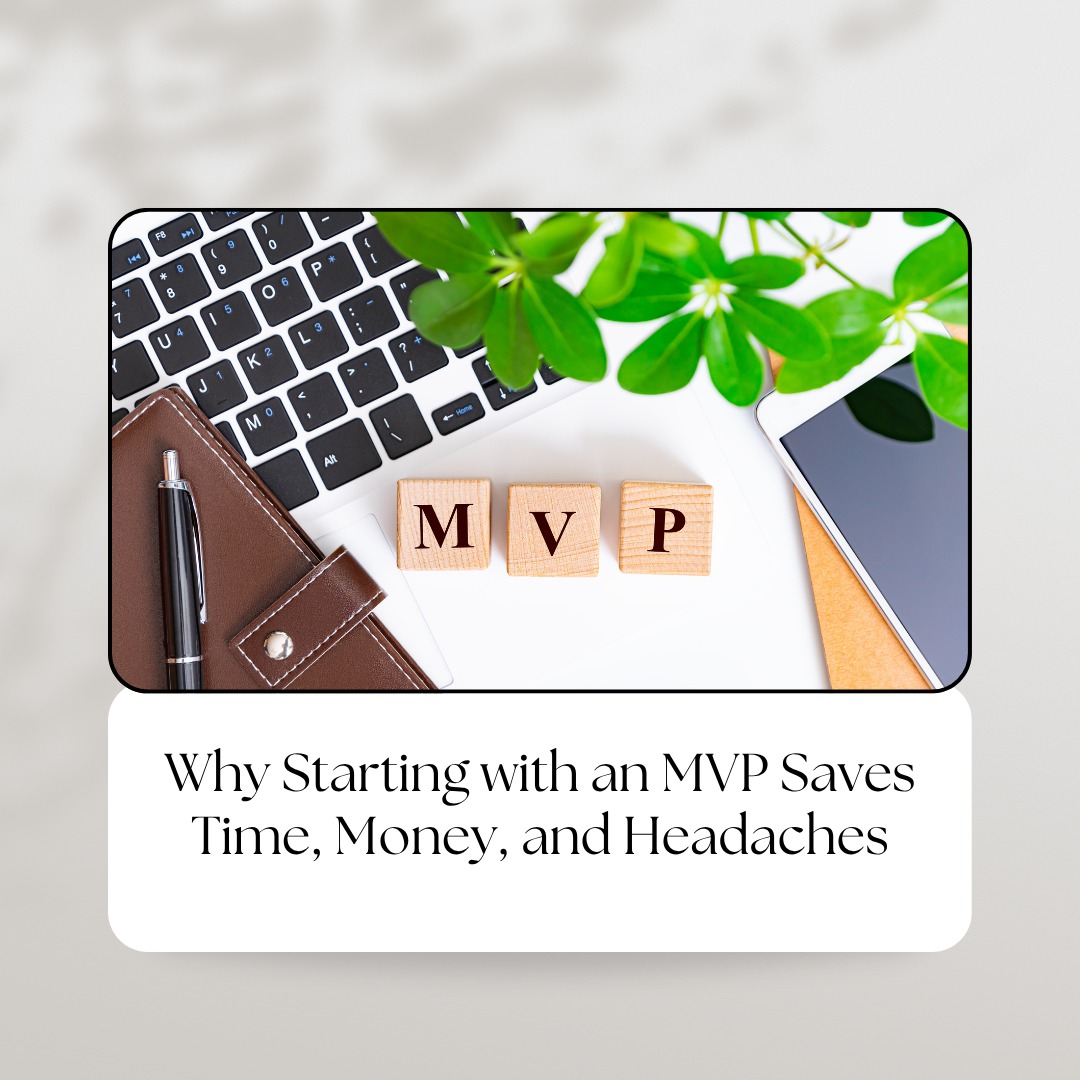
That’s where an MVP — Minimum Viable Product — comes in.
It’s not just a buzzword.
It’s a smart way to test your idea, see if it works, and grow with less risk — all while learning a lot along the way.
What is an MVP really?
An MVP is the simplest version of your product that still solves a real problem for your users.
It’s not messy or broken it’s just focused.
* No extra features
* No fancy looks
* Just the basic parts that matter
Think of it like this:
You don’t need to make a whole pizza with stuffed crust, exotic toppings, and truffle oil on day one.
Start by checking if people even want a simple slice.
1. It Saves You Time
Time is your most valuable resource, especially when starting out.
Building a fully loaded product can take 6 to 12 months, or even longer.
But what if customers don’t care about half the features?
Then you’ve wasted months building something they never needed.
Launching with an MVP lets you:
* Go live in weeks, not months
* Test early
* Get real feedback
* Make quick changes
“Build fast.
Fail fast.
Learn faster.”
2. It Saves You Money
Every extra feature, every small delay, every design tweak costs money*
Unless you’re backed by deep-pocket investors, your goal should be to *stay lean and survive.
With an MVP, you can:
* Build and test your idea at low cost
* Skip hiring a big team early
* Save money for what truly matters
“Why spend on a big house when you’re not even sure people will come visit?”
3. It Saves Headaches (A Lot of Them)
Ever heard a founder say,
“We spent 8 months building this… and nobody’s using it”?
Exactly.
MVPs help you:
* Stay on track
* Keep goals clear
* Avoid overthinking
Instead of guessing, you bring users in early, get their feedback, and improve along the way.
No more late nights wondering, “Did we build the right thing?” You’ll already know.
4. It Turns Assumptions into Insights
We all fall in love with our own ideas.
But the market doesn’t care about our dreams — it cares about its problems.
An MVP gives you:
* Real data, not assumptions
* Insights from actual users
* The ability to pivot quickly
“Assume less. Ask more.”
Real-Life MVP Success Stories
* Airbnb — Started by renting out an air mattress in their apartment
* Dropbox — Launched with just a simple video to explain the concept
* Instagram — Began as a check-in app (Burbn) and pivoted to photo sharing
These billion-dollar companies all started small, smart, and focused.
Final Takeaway: Build Smart, Not Big (Yet)
Starting with an MVP isn’t about playing safe — it’s about being strategic.
An MVP helps you:
* Get started faster
* Use fewer resources
* Understand your users better
* Stay flexible and adaptable
* Avoid stress, confusion, and waste
“Don’t build a rocket and hope it flies.
Toss a paper plane, see how it flies, and then design your spacecraft.”
Ready to turn your idea into reality, the smart way?
Start small. Think big. Learn fast.